Buying off-plan in Dubai costs roughly 4% to 8% of the property value in acquisition fees on top of the price, dominated by the 4% Dubai Land Department registration fee. Since 1 February 2025 banks no longer finance that fee or the 2% broker commission, so on a ready property with a mortgage an AED 2m purchase needs about AED 547,000 in cash rather than the 20% most buyers budget. An off-plan purchase carries no agency commission but a much larger equity requirement, because lenders generally cap off-plan mortgages around 50% and only at or near handover.
Key takeaways
- Acquisition costs run about 4% to 8% of value on top of the price. The 4% DLD fee is not charged twice; Oqood registration is how that same 4% is paid.
- Since 1 February 2025 UAE banks no longer finance the DLD fee or broker commission, moving roughly 6% to 7% of value into cash. On a primary off-plan launch there is usually no commission, but the equity requirement is far higher because off-plan LTV is generally capped around 50%.
- An off-plan unit has no approved Mollak service charge budget, so every figure quoted at launch is an estimate, usually the area median rather than the tower's real amenity load.
- District cooling is billed separately from DEWA and the service charge. Empower's published demand charge is AED 750 per refrigeration ton per year, or AED 62.50 per RT per month, and it is payable even when the unit is empty.
- Advertised rents overstate transacted rents by up to 63% in the affordable segment, where the highest gross yields are marketed. The pattern reverses in parts of prime, so check both columns rather than assuming a direction.
- Exiting before handover costs about 7% to 11% of sale price, so you need roughly 8% to 11% appreciation just to break even.
01The headline price is about 70% of the story
Almost every off-plan enquiry starts with a price per unit and a payment plan. Neither tells you what the purchase costs. There are three separate cost layers, and only the first one is usually quoted.
- Cost to acquire. Government fees, registration, trustee and administration charges. Roughly 4% to 8% of value, and since February 2025 a much larger share of it must be cash.
- Cost to hold. Service charges, district cooling, management and voids. This runs every year for as long as you own it and is almost never disclosed accurately at launch.
- Cost to exit. No objection certificate, assignment fee and a second DLD fee paid by your buyer. Roughly 7% to 11% of sale price.
Add all three and the picture changes. A unit that looks like a 9% gross yield can be a 5.5% net yield that needs 9% appreciation before you can sell without a loss. None of that is hidden, exactly. It just is not volunteered.
02Layer one: what you pay to buy
| Item | Amount | What to know |
|---|---|---|
| DLD registration fee | 4% of declared value | Under Executive Council Resolution No. 30 of 2013 the fee is shared equally between buyer and seller unless agreed otherwise. In Dubai practice it is almost always agreed otherwise, and the buyer pays all 4%. It is negotiable in principle. On AED 1.2m that is AED 48,000. |
| Oqood registration | This is the 4% | The single most common confusion in Dubai. Oqood is the portal through which the 4% is registered, not an additional 4%. |
| Second 4% at handover | None | Converting Oqood to a title deed triggers only title-deed issuance and admin fees. |
| Trustee office fee | AED 2,100 or AED 4,200 | Including 5% VAT. The higher tier applies at AED 500,000 and above. Often not charged on a first off-plan sale, because the developer registers in-house, but it reappears on an assignment. |
| Developer admin / Oqood processing | AED 1,000 to 6,000 | Developer policy rather than regulation. Get the figure written into the contract. |
| Mortgage registration | 0.25% of the loan plus about AED 270 | Plus a valuation of roughly AED 2,500 to 3,500 and a bank arrangement fee of about 1% of the loan. |
| Agency commission | 0% on a primary off-plan purchase | The developer pays the broker, typically 2% to 8%. The 2% buyer commission applies on a secondary resale, not a launch. |
There is one thing on this list you cannot negotiate and one you can. The 4% is a government fee and is fixed. A "DLD waiver" promotion means the developer is paying it on your behalf for a limited period; the fee still exists and is usually reflected somewhere in the headline price. Ask what the price is with and without the waiver.
03The February 2025 rule that changed every deposit
This is the single biggest budgeting shock for resident buyers and it is still missing from most published cost guides. From 1 February 2025, UAE banks stopped financing the 4% DLD transfer fee and the 2% broker commission as part of a mortgage. No public Central Bank circular was issued; the change was communicated to lenders directly and reported across the UAE press, and it has been applied consistently since. Previously banks routinely wrapped most of those costs into the loan.
The practical effect is that roughly 6% to 7% of the property value moved from the loan column to the cash column, overnight.
| Item | Amount on an AED 2m purchase |
|---|---|
| Down payment at 80% LTV | AED 400,000 |
| DLD registration fee, 4% | AED 80,000 |
| Broker commission, 2% | AED 40,000 |
| Mortgage registration, 0.25% of loan plus fixed | about AED 4,300 |
| Trustee fee | about AED 4,200 |
| Valuation | about AED 3,000 |
| Bank arrangement fee, about 1% of loan | about AED 16,000 |
| Total cash required | about AED 547,000, or 27.4% |
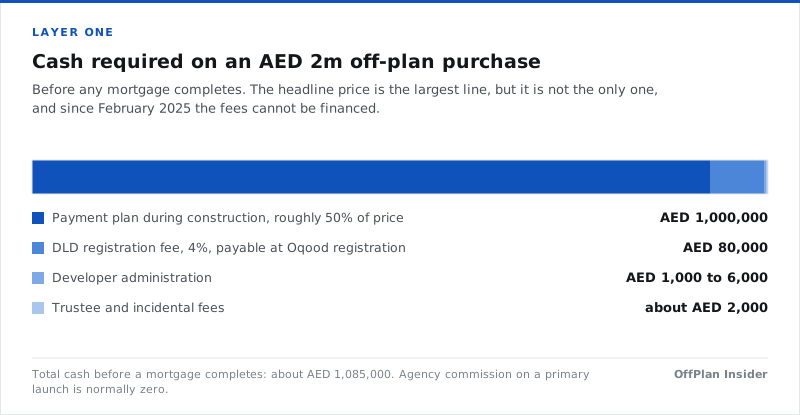
An off-plan purchase looks different, and it is worth doing the sum separately. There is normally no agency commission on a primary launch, because the developer pays the broker. But you fund the developer payment plan yourself during construction, since most banks will not lend until at or near handover, and off-plan mortgage LTV is generally capped around 50%. So the commission line disappears while the equity requirement roughly doubles.
| Item | Amount on an AED 2m off-plan purchase |
|---|---|
| DLD registration fee, 4%, payable at Oqood registration | AED 80,000 |
| Developer administration | about AED 1,000 to 6,000 |
| Agency commission on a primary launch | AED 0 |
| Payment plan during construction, e.g. 50% of price | AED 1,000,000 over the build period |
| Mortgage at handover, up to 50% LTV | AED 1,000,000, subject to valuation |
| Mortgage registration, valuation and arrangement | about AED 21,000 |
| Cash before any mortgage completes | about AED 1,085,000 |
The handover valuation trap
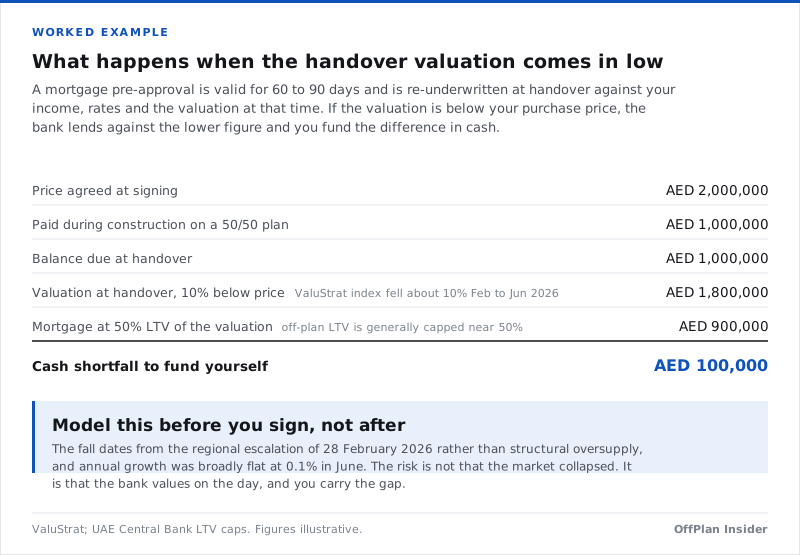
This is the largest end-user risk in the current cycle and it barely gets written about. A mortgage pre-approval is valid for 60 to 90 days and is re-underwritten at handover against your income, rates and the property valuation at that time, not at the time you committed.
A buyer who signed in 2022 for a 2026 handover is now being assessed against a market where the ValuStrat price index fell about 10% between late February and June 2026. Two pieces of context matter here. That fall dates from the regional escalation of 28 February 2026 rather than from a structural oversupply, and on an annual basis the index was broadly flat: ValuStrat had year-on-year growth at 0.1% in June, and the monthly decline had decelerated to 0.3% by July. Nonetheless, if the valuation comes in below your purchase price the bank lends against the lower figure and you fund the shortfall in cash. Model that scenario before you sign a long payment plan, not after.
04Layer two: what it costs every year to own
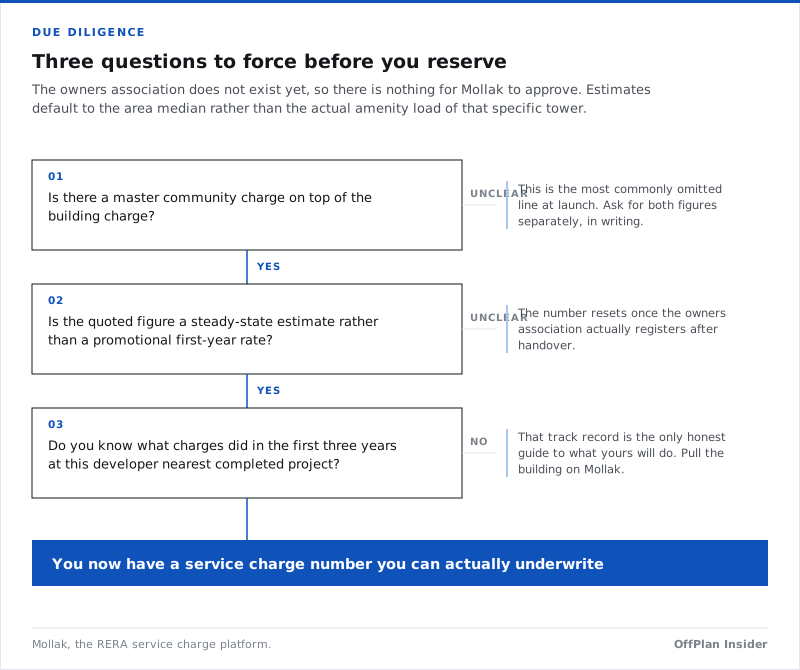
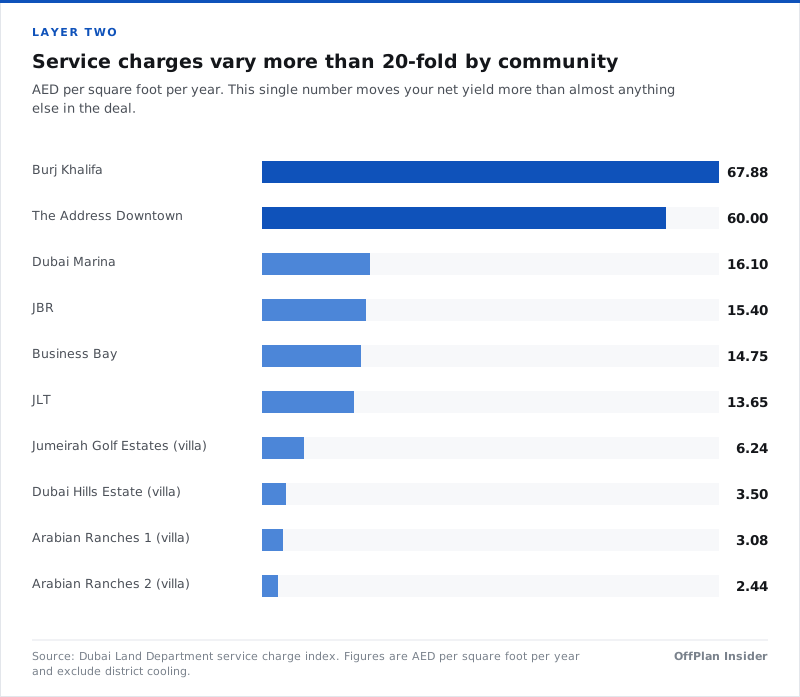
Service charges are the largest recurring cost of ownership and the least reliably disclosed at the point of sale, for a structural reason: an off-plan unit has no approved service charge budget. The owners association does not exist yet, so there is nothing for Mollak, the RERA service charge platform, to approve. Every figure quoted at launch is an estimate, and estimates default to the area median rather than the actual amenity load of that specific tower.
| Community | AED per sq ft per year | Tier |
|---|---|---|
| Burj Khalifa | 67.88 | Ultra-prime |
| The Address Downtown | 60.00 | Ultra-prime |
| Dubai Marina | 16.10 | Premium high-rise |
| JBR | 15.40 | Premium high-rise |
| Business Bay | 14.75 | Mainstream high-rise |
| JLT | 13.65 | Mainstream high-rise |
| Jumeirah Golf Estates (villa) | 6.24 | Villa |
| Dubai Hills Estate (villa) | 3.50 | Villa |
| Arabian Ranches 1 (villa) | 3.08 | Villa |
| Arabian Ranches 2 (villa) | 2.44 | Villa |
Broker-aggregated ranges for communities without a published per-building figure: JVC AED 8 to 14, Dubai Creek Harbour 14 to 23, Town Square 13 to 18, Dubai Sports City 8 to 13, International City 6 to 10, Damac Hills villas 3.17 to 7. Treat these as indicative and check the specific building on Mollak. For MBR City, Dubai South, Emaar South, JVT and Sobha Hartland there is no reliable published benchmark at all; pull those individually.
The arithmetic matters more than the number. A 1,000 sq ft apartment at AED 15 per sq ft costs AED 15,000 a year. The same unit at AED 30 costs AED 30,000. On an AED 90,000 rent, that single line is the difference between roughly 6.5% and 4.9% net before anything else is deducted.
The three questions to force before you reserve
- Is there a master community charge on top of the building charge? This is the most commonly omitted line at launch.
- Is the quoted figure a steady-state estimate or a promotional first-year rate? The number resets once the owners association actually registers post-handover.
- What did service charges do in the first three years at this developer's nearest completed project? That is the only honest guide to what yours will do.
District cooling: the bill nobody budgets for
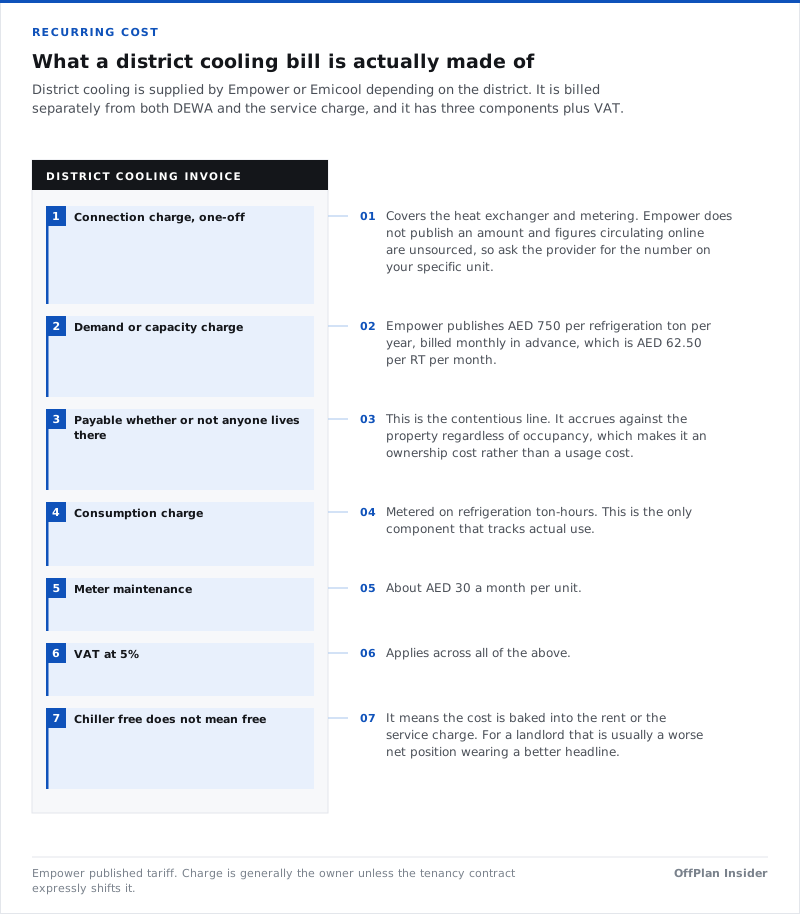
District cooling is supplied by Empower or Emicool depending on the district, and it is billed separately from both DEWA and the service charge. It has three components.
- Connection charge, a one-off cost covering the heat exchanger and metering. Empower does not publish an amount, and figures circulating online are not sourced, so ask the developer or the provider for the actual number on your unit.
- Demand or capacity charge. Empower's published tariff is AED 750 per refrigeration ton per year, billed monthly in advance, which works out at AED 62.50 per RT per month. It is payable whether or not anyone is living there.
- Consumption charge on metered refrigeration ton-hours, plus a meter maintenance charge of about AED 30 a month per unit. All of it carries 5% VAT.
That fixed capacity charge is the contentious one. It accrues against the property regardless of occupancy, which makes it an ownership cost rather than a usage cost, and it is generally the owner's unless the tenancy contract expressly shifts it. It is described across the market as the most actively disputed line in Dubai leasing wherever district cooling exists.
A word on "chiller free" listings. It does not mean cooling is free. It means the cost is baked into the rent or the service charge. For a landlord that is usually a worse net position wearing a better headline.
What else runs every year
- Property management, 5% to 8% of rent if you are letting.
- Void allowance, realistically one month a year, so about 8%.
- Ejari registration and DEWA administration on each tenancy.
- Landlord insurance and periodic maintenance and refresh.
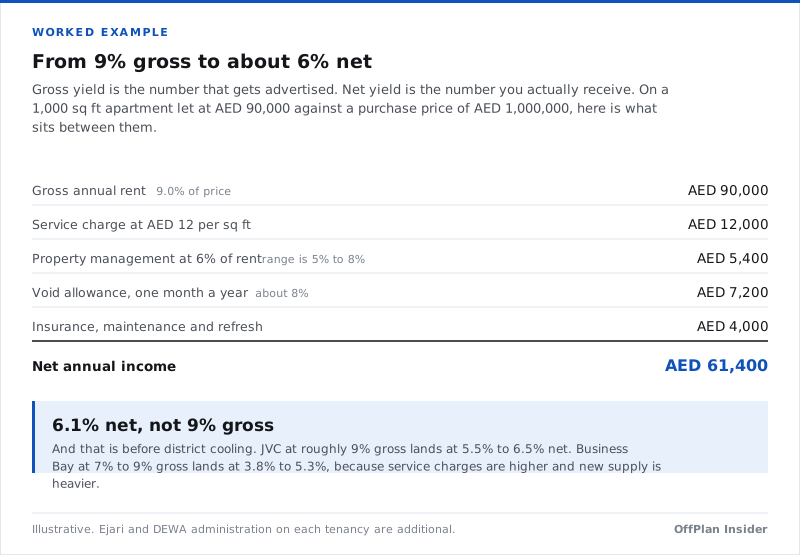
Stack those against gross rent and the drag is typically 200 to 350 basis points. JVC at roughly 9% gross lands at 5.5% to 6.5% net. Business Bay at 7% to 9% gross lands at 3.8% to 5.3%, because service charges are higher and new supply is heavier.
05The rent you are being quoted is probably not the rent
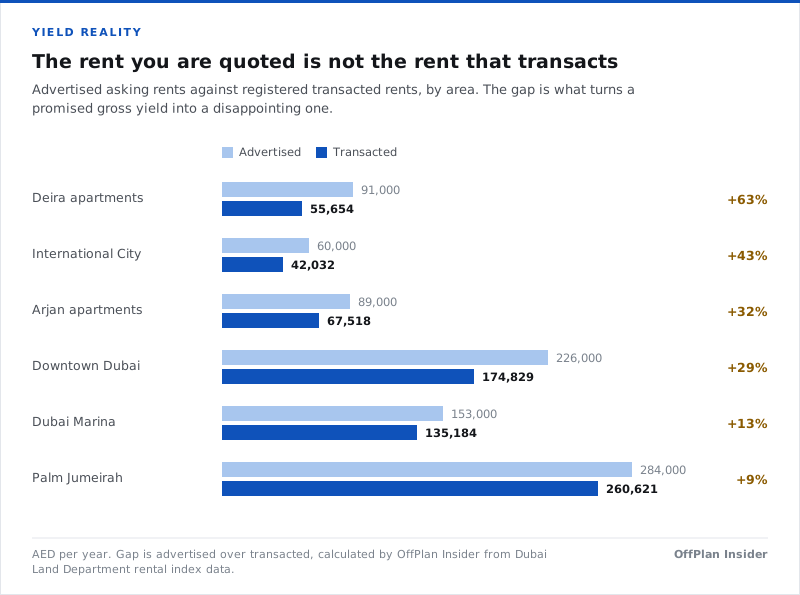
One more correction before the yield maths. Bayut publishes two rent columns, advertised and transacted, and the gap between them is large enough to invalidate most yield models.
| Area and unit | Advertised (AED/yr) | Transacted (AED/yr) | Gap |
|---|---|---|---|
| Deira apartments | 91,000 | 55,654 | +63% |
| International City apartments | 60,000 | 42,032 | +43% |
| Downtown Dubai apartments | 226,000 | 174,829 | +29% |
| Arjan apartments | 89,000 | 67,518 | +32% |
| Dubai Marina apartments | 153,000 | 135,184 | +13% |
| Palm Jumeirah apartments | 284,000 | 260,621 | +9% |
And rents are falling. CBRE recorded Dubai residential rents down 6.2% quarter on quarter and 2.6% year on year in Q2 2026, with roughly 18,000 units completing in the first half of the year which eased pressure further. A 2026 yield built on 2024 or 2025 rent levels is overstated before a single deduction is applied. For balance, the same CBRE data has sale prices up 1.9% year on year: rents and capital values moved in opposite directions, which compresses yields from both ends.
06Layer three: what it costs to get out
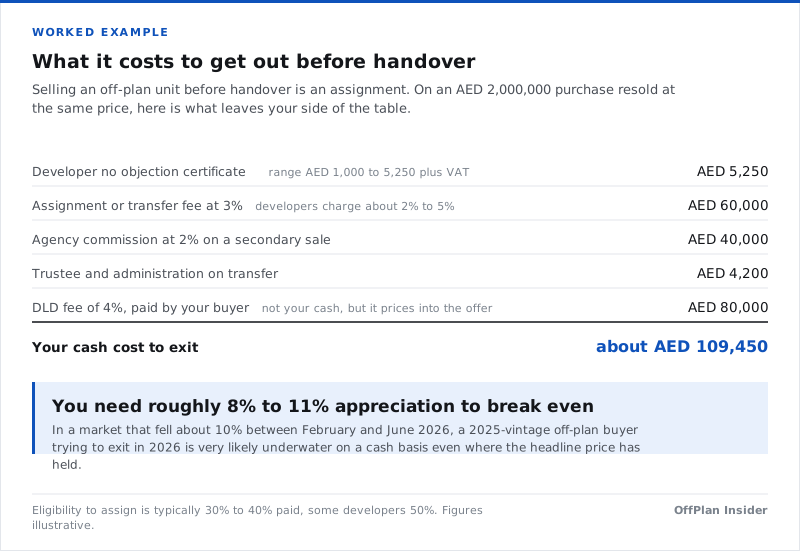
Selling an off-plan unit before handover is an assignment, and it is the most expensive stage of the whole cycle.
| Item | Typical range |
|---|---|
| Eligibility threshold | 30% to 40% of the price paid, some developers 50% |
| Developer no objection certificate | AED 1,000 to 5,250 plus VAT |
| Assignment or transfer fee | about 2% to 5% of the original price |
| DLD fee, again | Your buyer pays 4% on the new resale price |
| Agency commission | 2% on a secondary sale |
| All-in exit cost | about 7% to 11% of sale price |
| Break-even appreciation needed | about 8% to 11% |
That break-even figure is the number to sit with. In a market that fell about 10% between February and June 2026, a 2025-vintage off-plan buyer trying to exit in 2026 is very likely underwater on a cash basis even if the headline price has held. The full mechanics are in our guide to selling off-plan before handover.
A service charge is also an exit cost
This is under-discussed and it is expensive. A tower at AED 28 per sq ft against a comparable at AED 14 costs an extra AED 14,000 a year on a 1,000 sq ft unit. Capitalised at a 6% yield that is roughly AED 233,000 of value destruction, or 15% to 20% of a typical mid-market unit price. Resale buyers in 2026 pull the Mollak figure before they offer. A building with a runaway service charge does not trade at a small discount; it sits.
07The one-page version
| Stage | Cost | Notes |
|---|---|---|
| Acquire | 4% to 8% of value | Since Feb 2025 the DLD fee and commission cannot be financed |
| Hold, per year | AED 8 to 30 per sq ft, plus chiller | Plus management, voids and insurance if letting |
| Net yield drag | 200 to 350 bps | Gross minus service charge, chiller, management, voids |
| Exit | 7% to 11% of sale price | Needs 8% to 11% appreciation to break even |
08What to ask before you reserve
- What is the total cash required to complete, including every fee, in one number?
- Is the 4% DLD fee included in the quoted price, waived by the developer, or on top?
- What is the estimated service charge per square foot, and is there a master community charge above it?
- Is the building on district cooling, and what is the fixed capacity charge per month?
- What did service charges do in the first three years at your nearest completed project?
- At what percentage paid may I assign, what is the NOC fee, and what is the assignment fee?
- If I need a mortgage at handover, what happens if the valuation comes in below my purchase price?
If an adviser cannot answer all seven in writing, that is information too. Before you commit, read our guide to off-plan buyer protection and what happens if it goes wrong, which covers escrow verification and the statutory limits on what a developer can keep.
09How the financing side changes the number
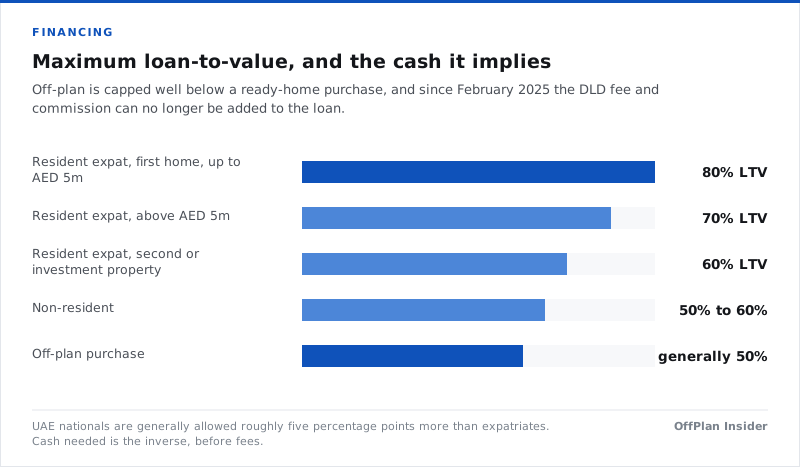
Your loan-to-value ratio decides how much of the purchase is cash, and the caps are not uniform. They vary by residency, by price band and by whether the property is your first.
| Buyer | Maximum LTV | Cash needed before fees |
|---|---|---|
| Resident expat, first home, up to AED 5m | 80% | 20% |
| Resident expat, above AED 5m | 70% | 30% |
| Resident expat, second or investment property | 60% | 40% |
| Non-resident | 50% to 60% | 40% to 50% |
| Off-plan | generally 50% | 50% |
| UAE national | roughly 5 points more than expat | - |
Two constraints sit on top of the LTV cap. The UAE Central Bank limits the debt burden ratio to 50% of gross monthly income, inclusive of credit cards, car finance and personal loans. And minimum income thresholds generally start around AED 15,000 to 25,000 a month depending on the bank and the loan size, with some non-resident products requiring AED 30,000 to 40,000 equivalent.
Rates in 2026
Fixed rates from major UAE banks have been running roughly 3.99% to 4.5% for an initial one to three year period, reverting to EIBOR plus a bank margin of about 1.00% to 1.99%, which implies something in the region of 4.8% to 5.5% variable thereafter. The best pricing is reserved for salaried UAE residents with salary transfer; non-resident quotes run higher. Rates move constantly, so treat any published figure, including this one, as indicative rather than current.
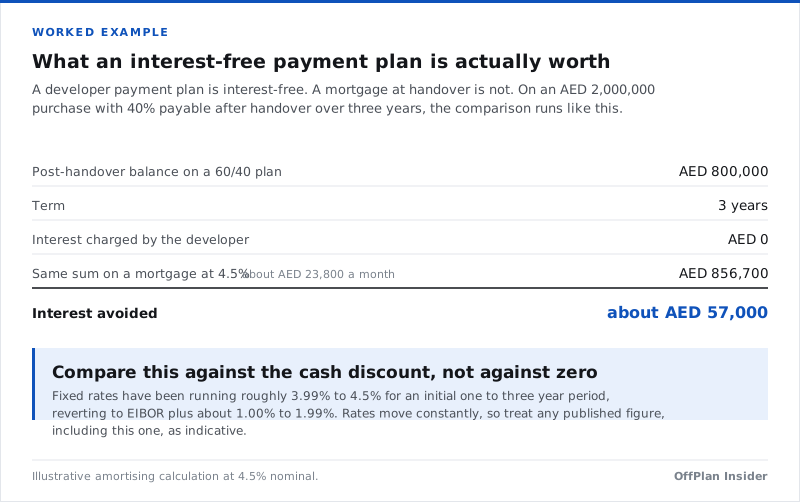
This is the honest comparison to run on an off-plan purchase: a developer payment plan is interest-free, and a mortgage at handover is not. A 60/40 post-handover plan is real financing at a rate of zero, which is often worth more than a headline discount for cash.
10If this is your first home in Dubai
The Dubai Land Department and the Department of Economy and Tourism launched a First-Time Home Buyer Programme in July 2025 that is materially under-used, largely because it is under-explained.
| Point | Detail |
|---|---|
| Who qualifies | UAE resident of any nationality, aged 18 or over, who does not currently own freehold residential property in Dubai. Owning a flat in Sharjah, London or Mumbai does not disqualify you. |
| Property | Under AED 5 million. |
| What you get | Priority access to launches, preferential pricing on off-plan units, flexible payment plans, better mortgage rates, and interest-free instalment of the DLD registration fee on eligible credit cards. |
| Cost | No application fee. |
| Scale | Around 22 participating developers and 5 banks, including Emaar, Damac, Nakheel, Meraas, Binghatti, Danube, Azizi and Ellington, with Emirates NBD, Dubai Islamic Bank and Mashreq on the lending side. The list has grown since launch, so check the current roster with DLD. |
| The catch | Widely reported as one-time only, with the status lost on purchase and benefits usable with one developer and one bank. Confirm those restrictions with DLD directly before you structure a purchase around the scheme. |
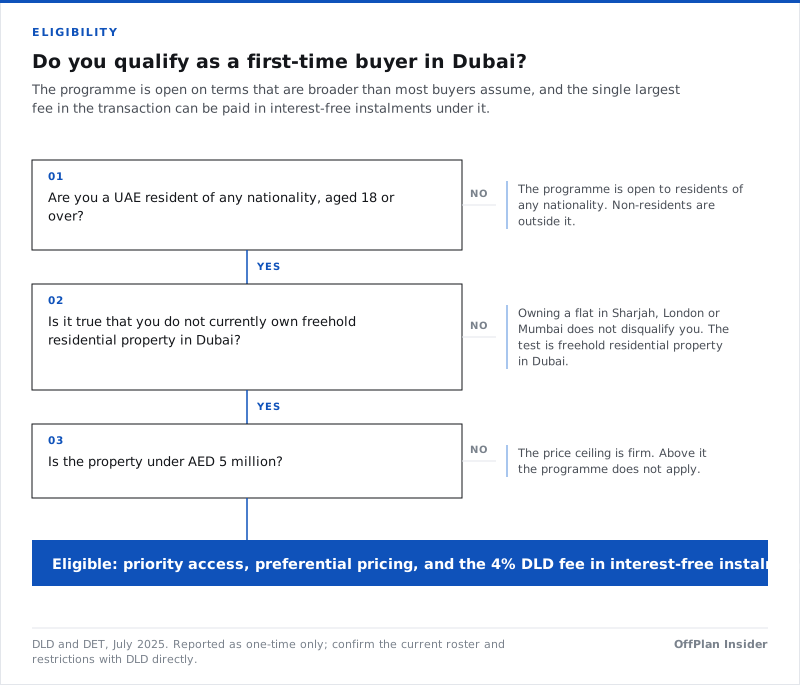
Given that the interest-free instalment applies to the single largest fee in the transaction, this is worth checking before you commit to a developer, not after.
11What tax you pay
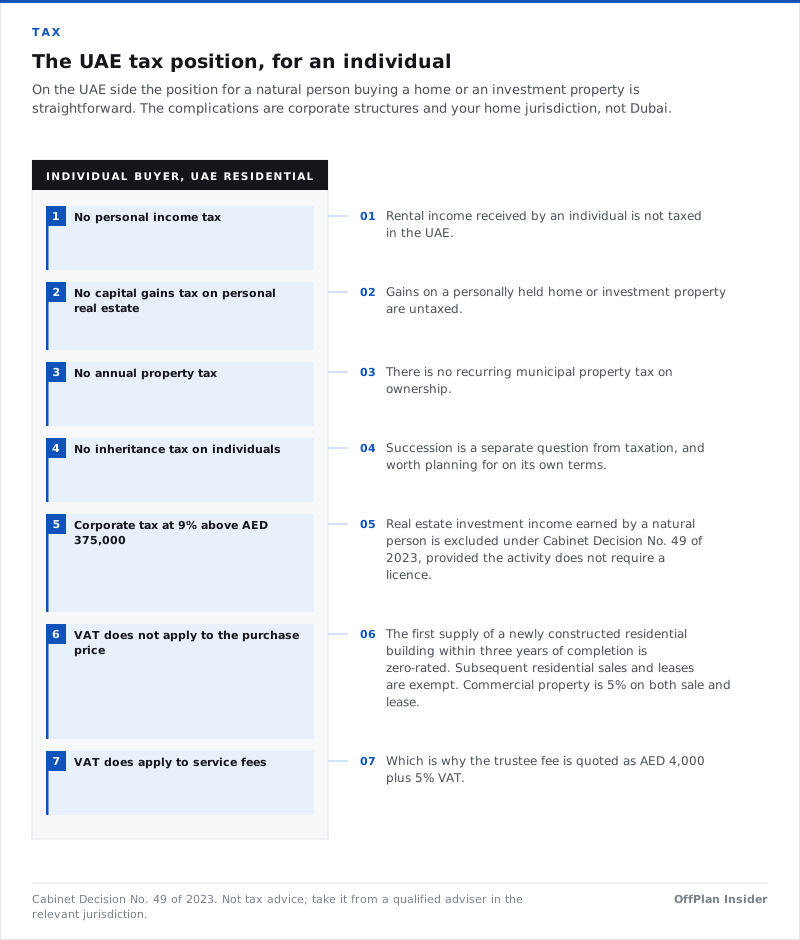
On the UAE side the position is straightforward for an individual buying a home or an investment property. There is no personal income tax, no capital gains tax on personal real estate, no annual property tax and no inheritance tax on individuals. Corporate tax at 9% applies above AED 375,000 of taxable income, but real estate investment income earned by a natural person is excluded under Cabinet Decision No. 49 of 2023 provided the activity does not require a licence.
VAT does not apply to your residential purchase price. The first supply of a newly constructed residential building within three years of completion is zero-rated, and subsequent residential sales and leases are exempt. Commercial property is 5% on both sale and lease. VAT does apply to service fees, which is why the trustee fee is quoted as AED 4,000 plus 5% VAT.
Buying through a company changes this analysis completely, and so does tax in your home country. If you are remitting from India, the Liberalised Remittance Scheme, TCS and Schedule FA disclosure all apply and are not covered here. None of this is tax advice; take it from a qualified adviser in the relevant jurisdiction.
[opi_market_data]
FAQQuestions buyers ask.
How much are the fees when buying off-plan property in Dubai?
Budget roughly 4% to 8% of the property value on top of the price. The largest single item is the 4% Dubai Land Department registration fee. Add a trustee fee of AED 2,100 or 4,200, developer administration of AED 1,000 to 6,000, and if you are using a mortgage, registration at 0.25% of the loan plus valuation and arrangement fees.
Do I pay the 4% DLD fee twice on an off-plan purchase?
No. Oqood registration is the mechanism through which the 4% is paid; it is not a separate 4%. When the Oqood converts to a title deed at completion, you pay only title-deed issuance and administration fees, not another 4%.
Can I add the DLD fee to my mortgage in the UAE?
No. From 1 February 2025 UAE banks stopped financing the 4% DLD transfer fee and the 2% broker commission as part of a mortgage. No public Central Bank circular was issued; the change was communicated to lenders and reported across the UAE press, and it has been applied consistently since. It moved roughly 6% to 7% of the property value from the loan into cash you must have at completion.
Is a DLD fee waiver from a developer real?
It is a time-boxed promotion in which the developer pays the 4% on your behalf. The government fee itself is not waived or negotiable, and the cost is usually reflected somewhere in the headline price. Ask what the price is with and without the waiver.
How much are service charges in Dubai?
The Dubai-wide median is roughly AED 17 per square foot per year. Mid-rise buildings without an on-site chiller plant run about AED 8 to 13, mainstream high-rise about 15 to 20, premium waterfront 18 to 25, and ultra-prime or branded stock 40 to 70 or more. Villas run about AED 2 to 6. Burj Khalifa is 67.88 and Dubai Marina averages 16.10.
Why is my chiller bill separate from my service charge?
District cooling from Empower or Emicool is billed independently of both DEWA and the service charge. Empower's published tariff has a demand charge of AED 750 per refrigeration ton per year, billed monthly in advance, which is AED 62.50 per RT per month and is payable even when the unit is empty.
On top of that sit a metered consumption charge, a meter maintenance charge of about AED 30 a month, a one-off connection charge quoted on application, and 5% VAT on all of it.
What is the difference between gross and net rental yield in Dubai?
The drag is typically 200 to 350 basis points. Deduct the service charge, the district cooling capacity charge, property management at 5% to 8% of rent, a void allowance of about one month, Ejari and DEWA administration, and landlord insurance. JVC at about 9% gross lands at 5.5% to 6.5% net; Business Bay at 7% to 9% gross lands at 3.8% to 5.3%.
Sources & methodWhere these figures come from.
Sources
- Dubai Legislation Portal: ECR 30 of 2013
- The National: UAE property mortgages fees
- Bayut: Dubai rental market report H1 2026
- Gulf News: Dubai rents ease 62 while home prices stay above 2025 levels
- Dubai Land Department: Rental index
- Central Bank of the UAE Rulebook: Regulations regarding mortgage loans
- Empower: Charges explanation
What we could not verify
- No claims in this guide are flagged as unverified. If you spot something that has changed, tell us and we will correct it.
26 Aug 2026 · Reviewed by OffPlan Insider Research. First published 26 Aug 2026, updated 5 Oct 2026.