Jumeirah Garden City, Dubai: a central Sheikh Zayed Road district covering old Satwa and Al Wasl, the 2008 masterplan that stopped, why the register says Al…
Emirate
Dubai
Ownership
On request
Metro
Red Line along the southern edge
Projects analysed
1
Figures as at September 2026
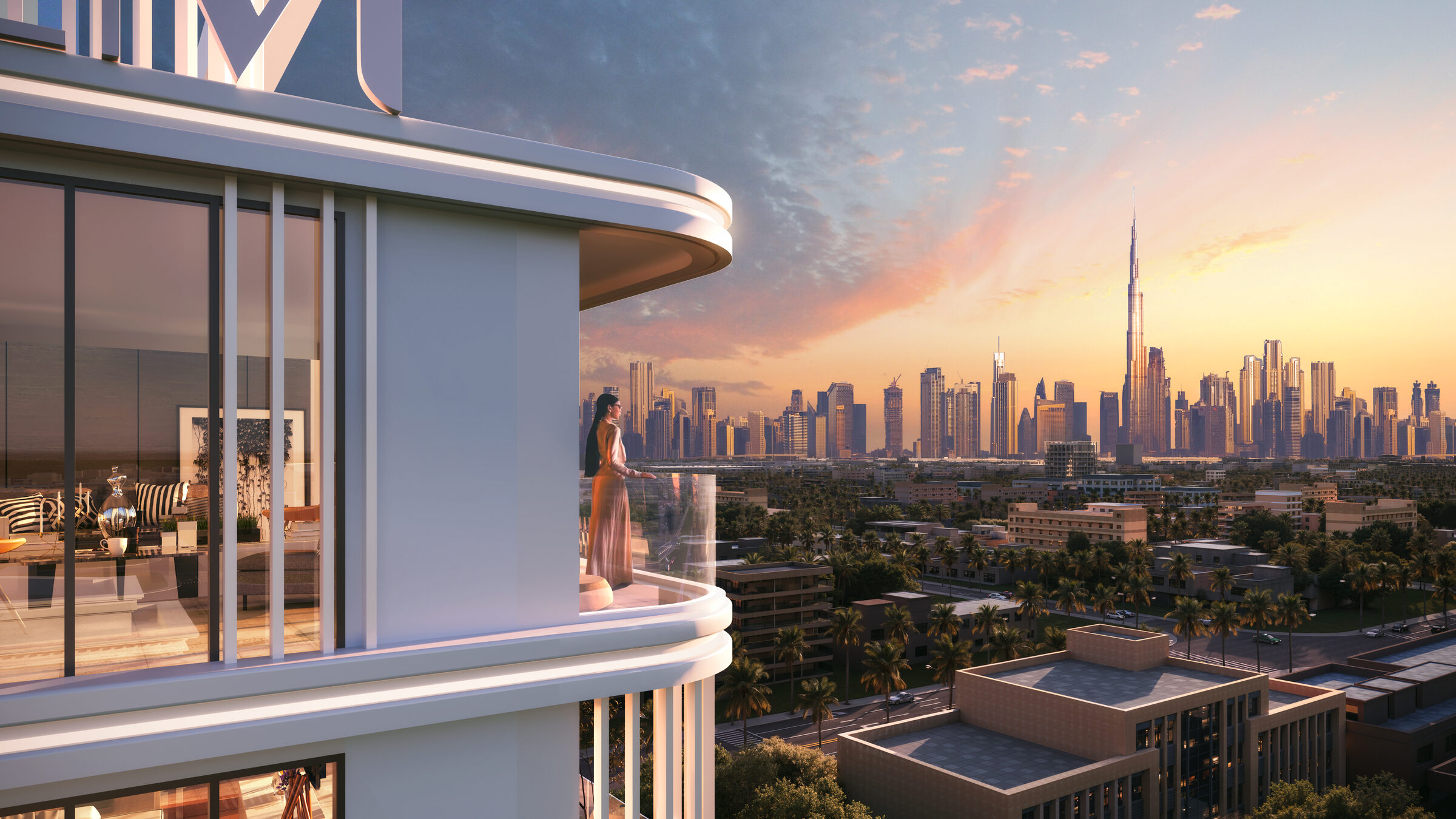
A LINEA by HOLM balcony looking over Jumeirah Garden City to Downtown Dubai
An honest look at what works here and what to watch, taken from the record rather than the brochure.
What is strong
Central position that new districts cannot buy: DIFC, Downtown Dubai and the coast are all minutes away rather than a highway run.
The Red Line runs along the southern boundary on Sheikh Zayed Road, with four stations on that stretch.
Land is genuinely scarce because the district was built on decades ago, so no single developer can flood it with supply.
The old Satwa street grid is fine grained and walkable, which is rare in Dubai.
Plot by plot redevelopment means low rise buildings rather than towers, so density stays modest.
What to watch
The masterplan announced in 2008 was never built as proposed and its landmark towers were cancelled. Marketing that describes a canal, light rail or twelve districts is describing a plan, not a place.
The Dubai Land Department records plots here under Al Satwa. If a project file says Al Satwa and the brochure says Jumeirah Garden City, that is normal and not a discrepancy.
There is no masterplan authority delivering parks, schools or retail on a schedule, so amenity depends on what neighbouring plots become.
Redevelopment is happening around occupied older buildings, so the immediate surroundings of a new building may be a construction site for years.
Drive times published for this district are off peak. Sheikh Zayed Road at rush hour is a different number entirely.
Confirm the tenure recorded against the specific plot. The district is marketed as freehold, but tenure is a plot level fact on the title deed rather than a district level one.
Our take
Jumeirah Garden City is worth understanding as two separate things. One is a masterplan announced in 2008 that proposed to rebuild Satwa and Al Wasl at enormous scale and then stopped when the market turned. The other is what is actually happening now, which is quieter and more interesting: boutique developers buying individual plots in an old, central, walkable district and putting up low rise apartment buildings on them. The second is the thing you can buy into. Its case is position and scarcity, and both are real, because nothing else this close to DIFC is being released at these prices and the land cannot be manufactured. What you give up is the certainty a masterplan brings. Nobody is obliged to build you a park, a school or a shopping centre, and the plot next door may be a building site through your handover and beyond. Before buying here, walk the specific street, look at what is either side of the plot, check how the Metro is actually reached from that address, and drive Sheikh Zayed Road at the hour you would be driving it.
Jumeirah Garden City location and map
Where Jumeirah Garden City sits, and what surrounds it.
Map tiles from OpenStreetMap, loaded when this section comes into view. Community names shown on the map are OpenStreetMap data, not our own placements.
Jumeirah Garden City connectivity: metro, bus and roads
The argument for this district is distance, and it is a strong one. DIFC, Downtown Dubai, Business Bay, City Walk and the Jumeirah coast are all within a short drive, and the Red Line runs along the southern boundary. Very little else in Dubai sits this close to the business core at anything like these prices, because the land was built on decades ago and is only now being redeveloped. Two qualifications. The first is that the Metro stations serve Sheikh Zayed Road rather than the interior of the district, so whether the Red Line is genuinely usable from a particular building depends on where that building sits and how the crossing works. The second is that these are off peak figures published by developers. The five minutes to DIFC is real at ten in the morning and is not real at six in the evening on Sheikh Zayed Road. Drive it at the hour you would actually be driving it.
MetroRed Line along the southern edge
Four stations serve the Sheikh Zayed Road frontage, but they are on the highway rather than in the district, so access depends on where in the interior a plot sits.
The Red Line runs along the district's southern edge in the Sheikh Zayed Road median, with Al Jafiliya, World Trade Centre, Emirates Towers and Financial Centre serving that stretch
The stations are on the highway rather than inside the district, so reaching one from a plot in the interior means a crossing and a walk, or a short drive
We have not confirmed walking distances or crossing points for individual plots against RTA mapping
BusAl Satwa station on the edge
One of central Dubai's older bus hubs, with routes across Bur Dubai and Jumeirah. Route numbers not confirmed against RTA.
Al Satwa bus station sits on the district's edge and is one of the older RTA hubs in central Dubai, with routes across Bur Dubai, Jumeirah and the Sheikh Zayed Road corridor. We have not confirmed individual route numbers against RTA.
RoadCentral, on Sheikh Zayed Road
E11 on the frontage, Al Wasl Road behind it and 2nd December Street through the middle. The constraint here is congestion at peak rather than distance.
Sheikh Zayed Road (E11) along the southern edge, the district's main frontage and the Metro corridor
2nd December Street, formerly Al Diyafah Street, running through the district toward Jumeirah
Al Wasl Road on the northern side, the parallel route toward Jumeirah and Safa Park
Al Satwa Road and the older Satwa grid inside the district
On footWalkable by Dubai standards
The Satwa grid is one of the few genuinely fine grained street networks in Dubai, with shops, cafes and tailors at ground level. That fabric is also what the masterplan proposed to replace.
Satwa is an old, fine grained, low rise grid with shops and cafes at street level, which is rare in Dubai and is the district's least advertised asset. The qualification is that new buildings are arriving plot by plot into that grid, so what is next door to any given building is somebody else's decision and the street outside may be a construction site for several years.
Drive times
DIFC5 mindeveloper material
Downtown Dubai and Dubai Mall5 mindeveloper material
La Mer Beach5 mindeveloper material
City Walk8 mindeveloper material
Business Bay10 mindeveloper material
Dubai International (DXB)15 mindeveloper material
Palm Jumeirah20 mindeveloper material
Dubai Marina20 mindeveloper material
Baseline figures are off-peak and mostly quoted from developer material rather than independently timed. Move the slider to see the same journeys under heavier traffic. The multiplier is yours to set, because we have no sourced peak-hour figure for these routes and will not invent one.
Jumeirah Garden City is a central Dubai district on the north side of Sheikh Zayed Road, between Diyafa Street and Safa Park, covering the older Satwa and Al Wasl neighbourhoods. It is the name of a masterplan announced in 2008 rather than a finished place. The plan proposed roughly nine square kilometres, twelve districts and a population of 50,000 to 60,000, and it stopped when the market did. What exists today is the original low rise fabric of Satwa with new mid rise residential buildings going up plot by plot, and the Dubai Land Department still records those plots under Al Satwa rather than under the masterplan name. The district's case is position: DIFC, Downtown Dubai, City Walk and the coast are all a short drive, which almost nothing else at this price in Dubai can say.
Questions buyers ask
Where is Jumeirah Garden City?
On the north side of Sheikh Zayed Road in central Dubai, between Diyafa Street and Safa Park, covering the older Satwa and Al Wasl neighbourhoods. DIFC, Downtown Dubai, Business Bay, City Walk and the Jumeirah coast are all a short drive, and the Red Line runs along the southern boundary in the Sheikh Zayed Road median.
Was Jumeirah Garden City ever built?
Not as announced. The 2008 masterplan proposed roughly nine square kilometres, twelve districts, a central canal, light rail and a population of 50,000 to 60,000, at a cost put at around 350 billion dirhams. The financial crisis stopped it and its landmark towers, including 1 Dubai and Meraas Tower, were cancelled. What is happening instead is plot by plot redevelopment of the old Satwa fabric into mid rise residential buildings by small developers.
Why does the Dubai Land Department register say Al Satwa?
Because Al Satwa is the registered community and Jumeirah Garden City is a masterplan name used in marketing. A project file that reads Al Satwa while the brochure reads Jumeirah Garden City is normal and is not a discrepancy. When checking a project on the register, search the registered community rather than the marketing name.
Is there a Metro station in Jumeirah Garden City?
Not inside the district. The Red Line runs along the southern edge in the Sheikh Zayed Road median, with Al Jafiliya, World Trade Centre, Emirates Towers and Financial Centre on that stretch. Whether a station is walkable from a particular building depends on where in the district it sits and where the crossings are, so check that on the specific address rather than assuming it from the district.
Can foreigners buy in Jumeirah Garden City?
The district is widely marketed as freehold and new buildings here are being sold off plan to overseas buyers. Tenure in Dubai is recorded plot by plot rather than district by district, so confirm what is recorded against the specific plot on the title deed or the project file before paying anything, rather than relying on the district’s reputation.
What is it like to live in Jumeirah Garden City?
Satwa is one of the few genuinely fine grained, walkable street grids in Dubai, with shops, cafes and tailors at ground level and a long established residential population. New low rise apartment buildings are being inserted into that fabric one plot at a time. The trade off is that redevelopment happens around occupied older buildings, so a new building may sit next to a construction site for some years.
Aggregated from the 1 project we have analysed here, covering 210 homes. Counted from stock that has been released, rather than from the search-volume numbers portals quote, which a reader cannot audit.
Unit types released
Type
Projects
Size, sq ft
From
Studio
1
386 – 440
AED 960K
1 bedroom
1
626 – 720
AED 1.5M
2 bedroom
1
986 – 1,100
AED 2.4M
Projects counts how many analysed developments here offer that type. It is not a count of homes, because developers rarely publish the per-type unit split.
Where the entry prices sit
Band
Unit types priced from this band
Under AED 1M
1
AED 1M – 3M
2
AED 3M – 5M
0
AED 5M – 10M
0
AED 10M and up
0
Counted on each unit type’s published starting price, so a type spanning two bands is counted in the lower one.
Jumeirah Garden City rental yield: gross versus net
Every yield quoted in a listing is gross. This is the same purchase after the costs that are not optional. Change any figure and the answer updates.
Gross yield7.50%
→
Net yield5.85%
Drag: 165 basis points
Annual rent
120,000
Service charge
−5,600
Management
−7,200
Voids
−9,600
Insurance and maintenance
−4,000
Net income
93,600
District cooling is not included. Where a unit is on Empower or Emicool, the fixed capacity charge accrues whether or not anyone is living there, and it is generally the owner cost unless the tenancy contract shifts it.